
How to write a good screenplay
In short, to write an engaging screenplay, you need to write a lot. And read a lot. To write an engaging animated story, you need to watch a lot. But here is an important point: in animation, screenplays are written almost the same way as in live-action film. At least when it comes to structure: the same laws of dramaturgy apply. What's more, in festival cinema the laws of dramaturgy are almost the same as in Hollywood. The “skeleton” of an art-house film differs little from that of a mainstream one — only the execution style is different.
Today we'll talk about what a story is made of, how animated stories are written, and which techniques help hold the viewer's attention.

In this text you'll find a few lifehacks that will help you create an engaging story. At our studio, we always pay close attention to the script and the structure of the story, even if it's a ten-second commercial. If you'd like to discuss your idea and bring it into its best shape, write to us.
Setup
So, let's start from the very beginning. A brief summary of what the most popular textbooks say (my top picks right away: “The Hero with a Thousand Faces” by Joseph Campbell, “Story” by Robert McKee, and “The Tools of Screenwriting” by David Howard and Edward Mabley). A story has a beginning, a middle and an end. A setup, a climax and a resolution. Let's look at these components first using a film as an example: “Titanic.”

Let's tell the story of Jack Dawson. The setup of his story is not the moment he boards the Titanic. It is a big event for him, but Jack did nothing to make it happen. He won the tickets in a poker game, and even when his opponent got angry, Jack wasn't ready to fight for his winnings. He simply shut his eyes. Jack got lucky — and now his real story awaits.
The setup of Jack's story happens the moment he falls in love with a first-class woman. Unattainable, impossible for him. That is when the audience becomes fully and irrevocably invested in the story. Because the viewer now has a question: how will it all end? Remember, the setup is an event that irrevocably changes the main character's life.
Kolobok runs away from Grandpa and Grandma into a new, unknown world. His life will never be the same. Simba's father dies (“The Lion King”). His life will never be the same. Fairy-tale characters are dumped into the swamp Shrek loves more than anything in the world. Shrek has to get up and act to restore the way of life that suited him. The setup is the beginning of the hero's conflict with the outside world. It's the hero leaving a warm home, where everything is close and familiar, for an uncharted forest. It's a new world — completely unknown, mysterious, but inevitable.

Confrontation
Then begins the long, complex story of the hero's trials. Reversal, dramatic event, gap, progressive complications — different textbooks use different words for what drives the hero toward the goal.
We need to take a closer look here. We know films and animation where the hero has a very clear ultimate goal: to free their parents (Miyazaki's “Spirited Away”), to kill Voldemort (“Harry Potter”), to free Rose (“Titanic”). By the way, notice: Jack Dawson's goal is not so much to win the woman as to make her happy. That is exactly why he dies. Not because there's no room for him on the door, but because Rose would hardly have lived a happy life with Jack.

However, we also know films and animation where the hero's goal changes over the course of the plot. Where the hero seems to want one thing, but then realizes his goal is something else entirely.
At first Shrek doesn't want to fall in love or make friends, and has no intention of dealing with the outside world at all. His only wish is for everyone to leave him alone. So his initial goal is to rid his swamp of intruders. Only the development of the plot and his growing trials lead him to his ultimate goal.
Simba has no intention of defending his jungle or avenging his father's murder. His only goal is to live a selfish life, free of worries and trials. Only thanks to his allies and the realization that his land is in danger does he return to free others.
What does this tell us? It speaks to the author's professionalism. A story where the hero has a definite, final goal and simply achieves it isn't always interesting to watch. There are exceptions, of course, but the foundation of a good script is a complex hero. A hero with complicated feelings, a hero who doesn't always know what he wants, who has a difficult past. In any animated or live-action story, always try to create a hero full of contradictions.
Shrek is very kind inside, but very scary and menacing outside. Kesha the parrot is hot-tempered and arrogant, yet he always loves his owner Vovka. Kind and ready to help, even if he behaves like a child.

Remember Rose's future husband from the same “Titanic.” He is an unpleasant, slippery, malicious, selfish, narcissistic type. His Achilles' heel and the chief value in his life is his honor. And yet the film has a remarkable scene where Caledon, together with Jack, persuades Rose to get into the lifeboat. Once again: a man whose fiancée has just betrayed him teams up with her lover, side by side, to save the woman he loves. The hero puts his honor aside for the true love that is still in him. This is the author's professionalism — a complex, contradictory hero.

A hero is his choice. However, there is something that unites absolutely all stories — live-action and animated — and that distinguishes drama from literature. It's action. The hero must act.
The audience won't be interested in a story where the hero refuses to act. In rare cases, authors deliberately write stories with a passive hero to break the canon — for example, the Coen Brothers' “The Big Lebowski” — but such a script wouldn't have been brilliant if outside forces didn't press, shake and push the hero to get off the couch and do at least something. If a film or script has a weak protagonist, it most likely has a very strong antagonist.
Action is choice. This is an important point. A choice is the hero's action at a crossroads. The hero wants to go home, but three hundred miles away there's a princess in a castle. What to choose? Home is cozy and warm, but the castle is a new, unexplored world. The hero chooses to go rather than stay home. The hero has cancer, he will die in a couple of years, and he desperately wants to provide for his family. He also wants to feel significant at least once in his life. There's a decent option: start making illegal drugs. We're talking, of course, about “Breaking Bad.” Can you feel how difficult that choice is? It's great when life puts a hard choice in front of the hero.

Remember: was it hard for Jack Dawson to die to save Rose? In fact, it was fairly easy for him. That's why Jack isn't the hero of “Titanic” in the pure sense. But for Rose's future husband, putting his honor aside for the woman he loves is much harder. And that is an interesting, complex choice. A choice that comes easily to the hero is not a choice.
The hero's choice is the main engine of the story. It was very hard for Simba to decide to return from a carefree world to a world of responsibility, decisions and risk to life — his own and others'. That's a hard choice.
Perhaps the most important play in the world was written about the difficulty of choice. “To be, or not to be, that is the question.” That's Hamlet. And what makes this play and this hero great is the difficulty of the choice he wants (or doesn't want?) to make. And let's not forget that the plot of “The Lion King” is the plot of Hamlet.
Allies
What helps the hero make a choice? Allies are an important part of the narrative. Without allies, the hero would be nobody. The seven dwarfs help Snow White get rid of the Queen. Nala and Rafiki are Simba's allies, without whom he would never have returned home to save the land. No-Face, or Kaonashi, is the ally of Chihiro, without whom the girl could not have rescued her parents (Miyazaki's “Spirited Away”). Notably, at the start of the story he acts more like an antagonist, tempting the heroine with riches and gold, but Chihiro passes this test with dignity and tames the creature that seemed ready to destroy our heroes' entire world.
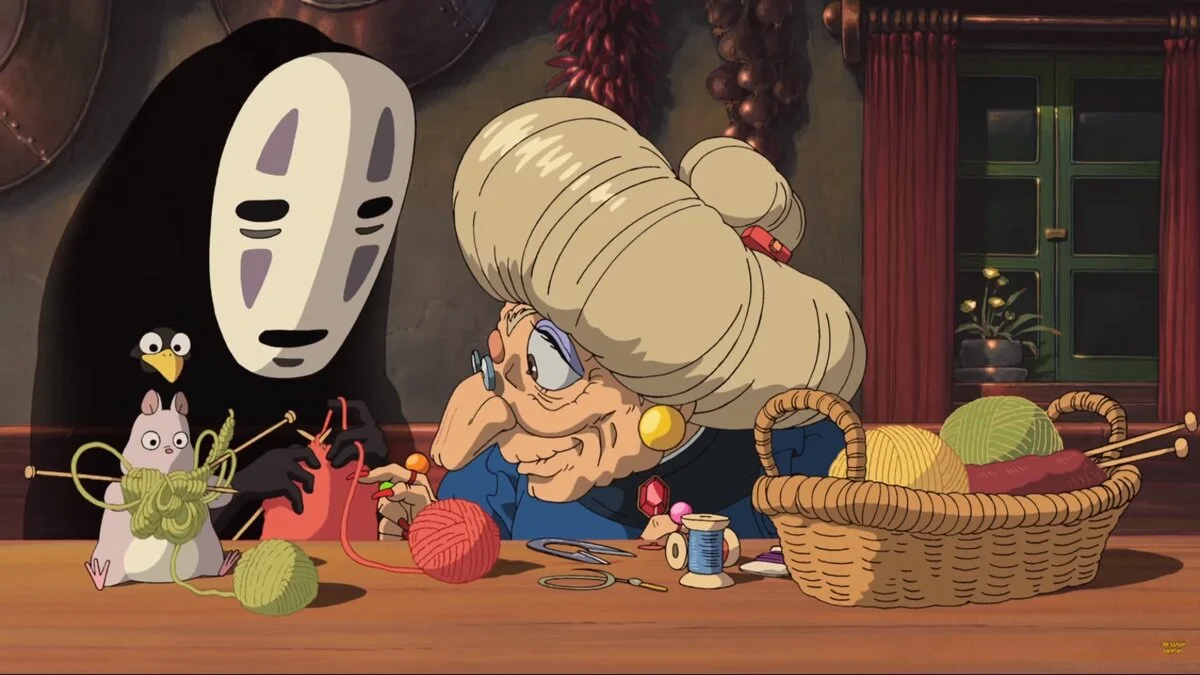
Help for the hero on the way to the goal, or in the unknown world, is a mandatory part of the structure.
Good and evil
Let's return to the fairy tale “Snow White and the Seven Dwarfs.” Remember the plot? Snow White is a kind, hardworking, charming young lady whom the Queen hates. One fine day, the Queen learns from the mirror that she is not the fairest of them all. She decides to kill Snow White. The attempt fails because the hired killer takes pity on the heroine, and Snow White ends up in the forest. There she meets the dwarfs; then the Queen learns the girl is alive, disguises herself as an old woman and comes to feed the heroine an apple. Snow White falls as if dead from a bite of the apple, and the dwarfs manage to destroy the Queen. It seems like the end — Snow White is dead — but a handsome prince saves the heroine with a kiss. That's the whole story.

This is a classic story with clearly defined good and clearly understood evil. If you're just starting to write stories, you can turn to fairy tales. Fairy tales have a very strict, clear plot. And in fairy tales, good quite often really does triumph over evil. Why does this matter? It helps you outline the lines of the antagonist and protagonist, decide which characters to keep and which to cut, and carry the story through to the ending. Also, antagonists in such stories are very easy to understand.
In the classic structure, the antagonist has only one goal: to destroy the main hero, because the protagonist gets in the way of his plans. And the antagonist usually has just one plan — world domination. This applies above all to fairy-tale adaptations. By the way, we've written here about how Disney adapted various fairy tales and how animation scripts are written in general.
If you'd like to discuss how to write your own story, write to us.
Scar's goal is to get rid of Simba to seize power. Hades' goal is to get rid of Hercules, because a prophecy said Hercules would stop Hades from conquering the world of the gods. Jafar's goal is to get rid of Aladdin to get the lamp and a path to world domination. The Queen's goal is to destroy Snow White, because the mirror said Snow White, not the Queen, is the fairest of all. And so on, and so forth.
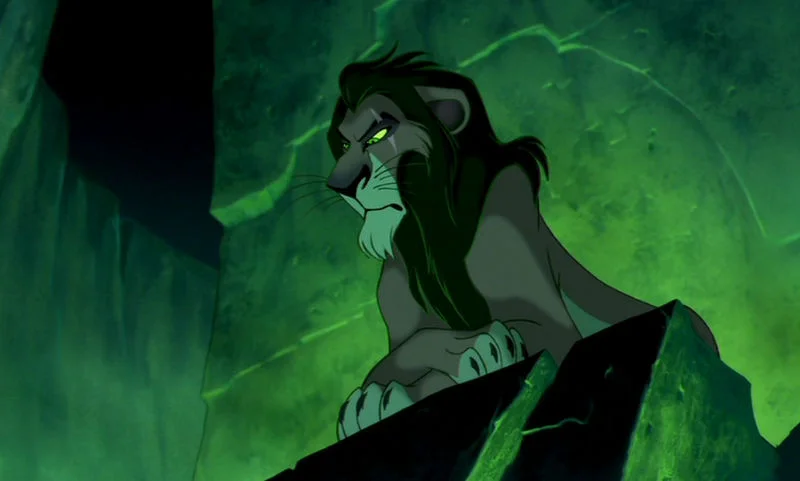
If you're unsure how to build a story around the main character, try focusing on the forces of evil. Who are these people/creatures? What do they want? Why do they need the main character? Remember that plot development is built on the constant confrontation between the forces of good and evil.
If we talk about more complex schemes, then of course we'll find much more interesting structures, in animation too.
Climax
The climax is the main battle between good and evil. In action films, this battle is clear-cut and consists mostly of direct physical action, with the opponent trying to harm the protagonist. By the way, notice that in Disney cartoons and even in “Harry Potter,” the protagonist never kills the antagonist himself. The main character can't be a murderer — that's the rule. Voldemort dies from his own spell rebounding on him. In “Snow White,” the Queen falls from a cliff struck by lightning. Notice how the climax of “The Lion King” is built. Simba throws Scar off the cliff, just as Scar did to Simba's father — but Scar doesn't die. Revenge is taken, but not completely. It's down below that Scar is killed by his own hyenas. That's how almost all the endings of classic stories work.

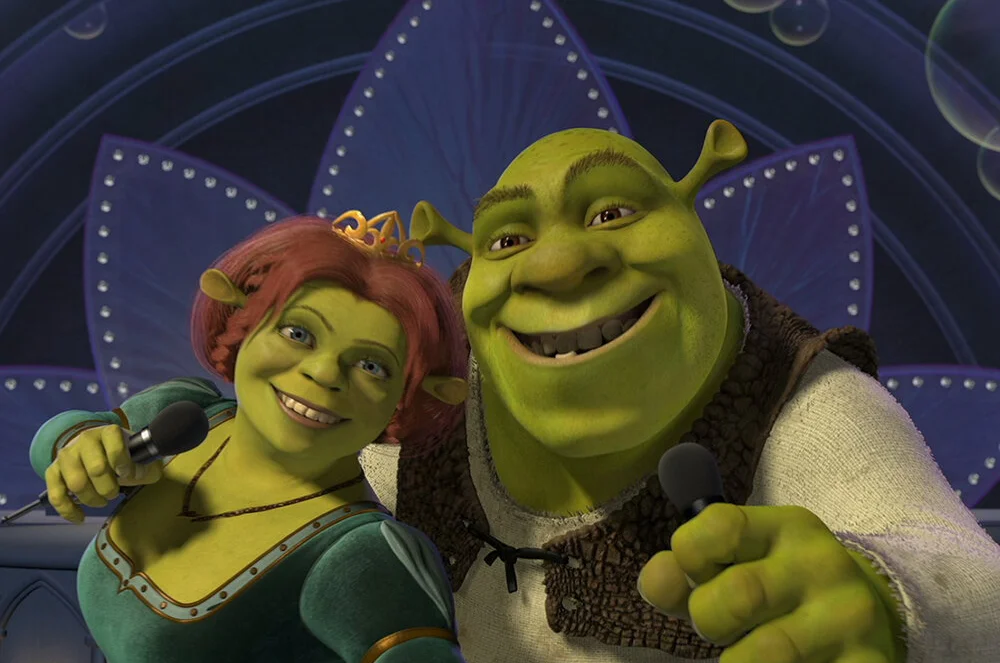
In more complex stories, of course, there can be other kinds of climax. Where the main character is ambiguous — with both good and bad traits — the climax follows an entirely different pattern. Take Shrek again: at the start of the film he was himself closer to evil, to an antagonist. His wish was to get rid of unwanted people and creatures. In a classic fairy tale, Shrek could easily have been the villain. But his journey is about learning to love, finding his own kind and opening his heart to the world. So his climax is saving the very ones who annoyed him so much.
And winning the princess he gradually falls in love with over the course of the plot. The climax of his story is the kiss and the reunion of the lovers. It's a story of a struggle with himself — one he managed to win.
Resolution
Remember, the ending of a story is the reason you wanted to tell it. No ending, no story. Still, don't be too strict about it. Some authors don't know how their story will end until they start writing it. That's one way to do it too, and it's fine. Nevertheless, the ending is an important part of the story. Let's set aside art-house films, where an open ending or no ending at all is a basic principle, and turn to our own examples.
Most often, of course, the hero gets what he wants — a beautiful princess, quite often wealth, especially if he was poor and suffered a lot before. He gets peace and is freed from those who made his life unbearable. We're talking, of course, about a happy ending.
An important point: before the happy ending, a good story shows the hero's total collapse. Snow White is dead, and it's completely unclear how to save her. WALL-E the robot shows no signs of human life and becomes a real robot. Often the main character is locked in a dungeon, cut off from any way out, stripped of allies. Just as often, the hero is helped by an object — something given to him for the road by parents, allies or friends. Sometimes it's information or memories, sometimes a physical object.
But the main thing the hero uses before his final victory is what he has gained along his long journey. When a beginning screenwriter starts work, he may come across good advice from a textbook: to write a story, describe the hero you want to see at the end, and make him his complete opposite at the beginning. Or the other way around. Either way, the key is that in the finale, before his rebirth, the hero uses what he has learned over the course of the plot. Shrek learned to communicate, to connect with people, to love — that's why he manages to win the princess and be happy. Kesha the parrot learns to listen to others and not think only of himself, which is why he reaches a happy ending. In “The Little Mermaid,” Triton, who used to be terribly afraid of humans, turns his own daughter into a human, because only that can make her happy.

The ending is the hero's final transformation. In the classic structure, it's a hero who will never live his old life again. Sometimes it's the hero's death, his complete destruction. In “Breaking Bad,” the hero dies, but happy, because he ended his life as the bad guy he always wanted to be. That was his path. Simba leaves the story as a grown lion — brave, strong, able to lead others, having taken responsibility for his own life and the lives of others. The main thing we need to know is that the hero has changed. He is not the same as at the beginning.
That's probably all. And remember: no textbook will tell you the right way to write a story. There are no recipes. McKee, the author of “Story,” never wrote a single great screenplay. Talent and craft are the two keys to writing well. At our studio, we know how to write well. If you want your own animated video, write to us.
Author: Sasha Potapova
CONTACTS
Write to us at the contacts below to discuss the project, or fill out the brief and we will contact you
@ Betooned 2026